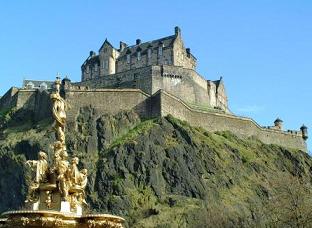
The scent of stone aged by centuries hits you first as you step onto Edinburgh Castle Rock, a volcanic plug that has witnessed siege after siege. Wind whips across the Esplanade, carrying echoes of military tattoos and royal proclamations. Inside, the Crown Jewels of Scotland gleam behind bulletproof glass, while Mons Meg, a medieval cannon, sits silent but imposing. Climbing the spiral stairs to St. Margaret’s Chapel, you feel the weight of history in every cold, worn step.
In This Article
The Crown Jewels and Mons Meg
The Crown Room within Edinburgh Castle houses the Honours of Scotland, widely recognised as the oldest surviving crown jewels anywhere in the British Isles. The crown, sceptre, and sword of state date from the late 15th and early 16th centuries and were used in the coronations of Scottish monarchs until the Union of the Crowns in 1603 when James VI of Scotland also became James I of England. hidden away for safekeeping after the Act of Union in 1707, they were dramatically rediscovered in 1818 by the famous novelist Sir Walter Scott, sealed in a chest within the castle walls where they had remained undisturbed for over a century. The Stone of Destiny, the ancient coronation stone of Scottish kings upon which monarchs were crowned for centuries, sits beside the crown jewels after its formal return to Scotland from Westminster Abbey in 1996. Nearby on the castle esplanade, the great medieval cannon Mons Meg dominates the upper ward of the castle. Built in 1449 in Flanders and capable of firing a 150-kilogram stone projectile for nearly 3 kilometres, Mons Meg was one of the most technologically advanced and powerful weapons of its age anywhere in Europe.
St Margaret’s Chapel and the Royal Palace
St Margaret’s Chapel, the oldest surviving building in Edinburgh and one of the oldest in all of Scotland, dates from the early 12th century and was built by King David I in loving memory of his mother, Queen Margaret, who was later canonised as a saint. This tiny Romanesque chapel, measuring just 15 by 10 feet in floor area, features a beautifully carved chancel arch decorated with chevron patterns in the Norman style and original 12th-century stonework that has survived centuries of military occupation and repeated sieges. The chapel remains an active place of Christian worship today, with regular services held throughout the year. The Royal Palace within the castle walls, built during the 15th and 16th centuries, houses the historic apartments where Mary Queen of Scots gave birth to her son James VI in 1566, a child who would later unite the crowns of Scotland and England under a single monarch. The palace rooms are furnished with carefully selected period pieces, including a recreation of the original wooden ceiling painted with heraldic devices representing the royal houses of Scotland. The Great Hall, built by James IV in 1511 for state occasions, features one of the finest surviving medieval hammerbeam roofs in the country.
Military History and the National War Museum
Edinburgh Castle has served as a military garrison and fortress for many centuries, and its military heritage is preserved in considerable detail within the National War Museum of Scotland, located within the castle complex. The museum thoughtfully chronicles Scottish military history from the 17th century through to the present day, with well-curated exhibits on the famous Highland regiments, the Scottish soldiers who served and died in both World Wars, and the more recent conflicts and peacekeeping operations of the late 20th and early 21st centuries. The Scottish National War Memorial, housed in a converted 18th-century barracks block and rededicated in 1927 after the First World War, commemorates the more than 150,000 Scottish servicemen and women who have lost their lives in conflicts since the Great War. The memorial’s Roll of Honour, listing each individual name separately in beautifully hand-illuminated volumes displayed in carved oak cabinets, provides a deeply moving and personal reminder of the human cost of war. The One O’Clock Gun, fired daily from the half Moon Battery, continues an unbroken tradition that began in 1861 when the gun provided a time signal for ships anchored in the nearby Firth of Forth below the castle rock.
Which moment in Edinburgh Castle history would you travel back to witness first? 📍
Explore all our United Kingdom travel guides, from London landmarks to the Scottish Highlands.
Explore More
If you enjoyed this article, you might also like:
