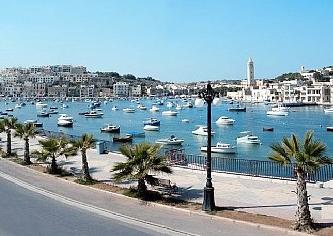
The salt-tinged breeze carries the sound of gently lapping water across Marsascala, a fishing village turned seaside escape on Malta’s southeastern coast. Unlike the bustling tourist centres of the north, Marsascala retains a relaxed authenticity that rewards visitors who seek it out. The curved harbour, filled with colourful fishing boats known as luzzus, fronts a promenade lined with seafood restaurants serving the day’s catch. The nearby Saint Thomas Bay offers swimming in clear waters, while the salt pans carved into the rocks along the coast tell a story of traditional Mediterranean industry that stretches back centuries.
In This Article
St Thomas Bay and the Coastline
The coastline around Marsascala offers some of Malta’s most appealing swimming spots, well away from the crowded beaches of the tourist-heavy northern resorts. St Thomas Bay, a pleasant 10-minute walk east of the town centre, provides a sandy beach with shallow, clear waters that are ideal for families with young children learning to swim. The bay is naturally sheltered from the prevailing Mediterranean winds, creating calm conditions for swimming and paddleboarding throughout most of the long summer season. The rocky coastline on either side of the bay is dotted with traditional salt pans in fascinating geometric patterns, carved by hand into the soft limestone rock by generations of local families working in an ancient tradition. These salt pans, some of which date back to the Arab occupation of Malta in the 9th century AD, are still actively in use today during the summer months, producing high-quality natural sea salt harvested by hand when the water evaporates in the heat. The coastal walking path from Marsascala to St Thomas Bay offers stunning views of the open Mediterranean Sea and passes the historic St Thomas Tower along the way, a 17th-century watchtower built by the Knights of St John that now serves as a popular restaurant.
Local Life and Traditional Culture
Marsascala retains a strong and authentic sense of Maltese community life that has been largely lost in the more tourist-oriented resorts on the northern coast of the island. The town’s harbour, filled with colourful traditional fishing boats known as luzzus painted in bright blues, reds, and yellows, remains the centre of daily activity and local commerce. Local fishermen still go out in their boats at dawn and return in the early afternoon with their fresh catch, which is sold directly from the boats at the water’s edge or supplied to the seafood restaurants lining the promenade around the bay. The Marsascala parish church, dedicated to the Immaculate Conception and dominating the skyline with its distinctive dome, serves as the focal point for the town’s annual festa in early December, when the streets are decorated with lights and banners, statues of saints are paraded through the neighbourhood, and spectacular fireworks illuminate the harbour waters. The nearby fishing village of Marsaxlokk, a convenient five-minute drive west along the coast, hosts Malta’s most famous and colourful fish market every Sunday morning, where visitors can buy fresh Mediterranean seafood alongside locals.
Exploring the South Coast of Malta
Marsascala serves as an excellent and convenient base for exploring the dramatic southern coastline of Malta, which offers some of the most impressive scenery on the island. The nearby Ghar Dalam cave and museum, a short 10-minute drive north of the town, contains the fossilised remains of prehistoric dwarf elephants and hippopotamuses that lived on the island during the last Ice Age, providing fascinating insights into Malta’s ancient natural history. The famous Blue Grotto, a spectacular series of sea caves on the southern coast about 20 minutes away by car, offers unforgettable boat trips through caverns where the water glows in mesmerising shades of azure and turquoise as sunlight filters through underwater openings. The fortified capital city of Valletta, a 20-minute drive north, is a UNESCO World heritage site packed with Baroque architectural masterpieces, including the magnificent St John’s Co-Cathedral with its painted vaulted ceiling and the vast Grandmaster’s Palace. The Hal Saflieni Hypogeum, a Neolithic underground temple complex dating back over 5,000 years that was discovered accidentally in the early 20th century, requires advance booking months ahead but rewards visitors with a glimpse into the spiritual life of Malta’s prehistoric inhabitants.
Would you prefer a quiet Maltese fishing village or the lively resort towns of the north? ⛵
Explore all our Malta travel guides, from Valletta bastions to Gozo cliffs.
Explore More
If you enjoyed this article, you might also like:
