The carriage stops at the main gate. The driver cuts the engine and the silence hits you first. No cars, no scooters, no hum of daily life. Just the sound of your own footsteps on limestone and the wind moving through the alleyways. Mdina sits on a hill in western Malta, 185 metres above sea level, and the view from the bastions stretches across the island to the Mediterranean. This is a walled city that has barely changed in five centuries and it holds its history close.
The Gate and the Walls
The main gate, built in the Baroque style in 1724, was designed by the French architect Charles Francois de Mondion. The gate is flanked by two bronze statues of the Maltese lion. The walls themselves are older, dating from Roman foundations in 200 BC, reinforced by the Arabs in 870 AD, and strengthened by the Normans in the 12th century. The outer fortifications enclose the city completely. You enter through the gate and the modern world stays behind. The walls are 185 metres above sea level and on a clear day you can see the coast of Sicily, 93 km to the north.
The Silent Streets and Palaces
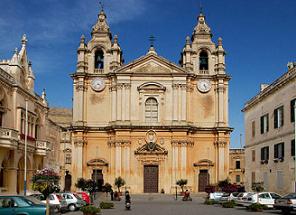
Mdina has fewer than 400 permanent residents. The ban on motor vehicles inside the walls has been enforced since the 1970s and the result is a city that sounds like the 14th century. The streets are narrow and winding, designed to confuse invaders and to channel the wind. The Palazzo Falson, a 13th-century medieval palace, houses a collection of paintings, silverware, and antique furniture assembled by Captain Olof Gollcher in the early 20th century. The Palazzo Vilhena, built in 1726, now serves as the National Museum of Natural History. The cathedral, the Cattedrale di San Paolo, was built between 1697 and 1702 on the site where the Roman governor Publius met Saint Paul after his shipwreck in 60 AD. The cathedral floor is a mosaic of marble tombstones. The dome is painted with scenes from Paul’s life.
The View from the Bastions
The bastions on the western side of the walled city offer the most complete view of the Maltese landscape. To the south, the fishing village of Marsaxlokk and the Blue Grotto. To the east, the Three Cities and the Grand Harbour. To the north, St Paul’s Bay and the island of Comino. The bastions were built by the Knights of St John in the 16th century, after the Great Siege of 1565, and their design was revolutionary for the period: low, angled, sloping walls designed to deflect cannon fire rather than absorb it. The walk along the bastions is 800 metres in total and the best time to walk it is at sunset, when the limestone glows amber and the island settles into evening.
What was the moment in Mdina that made you stop walking and just stand still?
Explore all our Malta travel guides, from Valletta bastions to Gozo cliffs.
Explore More
If you enjoyed this article, you might also like:
