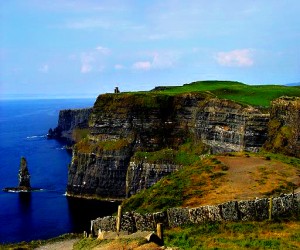
Ireland unfolds like a story told in green, from the rugged Atlantic cliffs to the gentle midlands and the vibrant streets of Dublin. Travelling around the Emerald Isle reveals ancient history alongside modern culture, where a pub session of traditional music can follow a morning exploring a five thousand year old passage tomb. The Wild Atlantic Way stretches over two thousand kilometres along the western seaboard, connecting dramatic headlands and picturesque villages like Dingle and Clifden. The Ring of Kerry loops through iconic scenery. Dublin offers literary heritage, world class museums, and a pub culture that defines the national character. The warmth of Irish hospitality ties the whole experience together.
Getting Around Ireland Beyond Dublin
While Dublin is well served by public transport, exploring the rest of Ireland requires careful planning. The Irish rail network, operated by Iarnrod Eireann, connects major cities including Cork, Galway, Limerick, and Belfast, but services are infrequent and stations are often located outside town centres. The Dublin to Galway route takes approximately two and a half hours, passing through the boglands of the midlands and the historic town of Athlone on the River Shannon. Bus Eireann provides more extensive coverage, reaching smaller towns and villages that the trains miss, though journey times are naturally longer. For maximum flexibility, renting a car is the preferred option for most visitors, allowing spontaneous stops at castles, beaches, and scenic viewpoints along the way. Rental prices in Ireland tend to be higher than in the UK, typically starting at around 30 euros per day for a small car, and manual transmissions are standard. Driving is on the left, and rural roads, particularly in the west, can be narrow and winding with high hedgerows that limit visibility. The Wild Atlantic Way, a 2,500-kilometre signed route along the west coast, is best experienced by car, with highlights including the Cliffs of Moher, the Connemara National Park, and the Slea Head Drive on the Dingle Peninsula. Flying into Dublin Airport is convenient, just a short hop from Great Britain, and the Aircoach bus service runs directly into the city centre. Dublin has an excellent bus network and the DART electric train service runs from Howth in the north to the seaside town of Bray in the south. Many visitors find that combining a few days exploring Dublin with renting a car for the remainder of the trip offers the ideal balance of convenience and thorough exploration.
Top Regions for an Irish Road Trip
The southwest of Ireland, encompassing County Kerry and County Cork, contains some of the most spectacular scenery in the country. The Ring of Kerry is a 179-kilometre circular route that passes through Killarney National Park, past the scenic Lakes of Killarney, and along the rugged Atlantic coast at the villages of Waterville and Cahersiveen. The Dingle Peninsula, further north, is less crowded than the Ring of Kerry and equally spectacular, with the dramatic Slea Head Drive offering breathtaking views of the Blasket Islands and the Great Blasket Island, which was abandoned by its last residents in 1953. County Clare, to the north, features the Burren, a unique lunar landscape of grey limestone pavements dotted with rare Arctic and Mediterranean wildflowers, and the majestic Cliffs of Moher, which rise 214 metres above the crashing Atlantic waves. Connemara in County Galway presents a wild, boggy landscape of mountains, lakes, and unspoiled beaches, with Kylemore Abbey and the Twelve Bens mountain range as key attractions for hikers and photographers. In the northwest, County Donegal offers some of Ireland most dramatic coastal scenery at Slieve League, where the sea cliffs are almost three times the height of the Cliffs of Moher yet receive a fraction of the visitors. Northern Ireland, though part of the United Kingdom, is easily accessible and offers the Giant Causeway, a UNESCO World heritage site composed of 40,000 interlocking basalt columns formed by volcanic activity 60 million years ago, and the historic walled city of Derry with its perfectly preserved 17th-century fortifications. Ferry connections to Ireland from the UK are available from Holyhead, Birkenhead, Stranraer, Cairnryan, Fishguard, and Pembroke, offering a scenic alternative to flying that also allows you to bring your own vehicle.
Would you drive the Wild Atlantic Way or explore Ireland historic cities and towns? 🍀
Explore all our Ireland travel guides, from Dublin pubs to the Wild Atlantic Way.
Explore More
If you enjoyed this article, you might also like:
