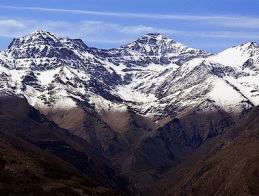
Mulhacén is mainland Spain\’s highest peak, a 3,479-metre giant in the Sierra Nevada range of Andalusia, and remarkably, one of the most accessible major summits in Europe. Unlike the technical climbs of the Alps, Mulhacén can be hiked in a single (long) day by any reasonably fit walker, with the reward of panoramic views stretching across the Mediterranean to the mountains of North Africa on clear days.
In This Article
Quick Facts
- Best time to climb: June, September (snow-free trails); winter mountaineering requires ice axe and crampons
- height: 3,479 metres (11,414 feet), the highest point in peninsular Spain
- How to get there: ~2.5 hours from Malaga by car to Capileira in the Alpujarras; national park shuttle bus available in summer
- Climbing difficulty: Moderate, no technical climbing required, but altitude and long distance (16, 22km round trip) demand good fitness
- Permit required: No permit needed for the standard route
The History and Legends of Mulhacén
Mulhacén is named after Muley Hacén, the 15th-century penultimate Moorish ruler of Granada, who according to legend asked to be buried on the highest peak of the Sierra Nevada so that he could forever look down upon his beloved kingdom. The name Mulhacén is a Spanish corruption of his name, Muley Hacén, and the mountain has carried this royal connection for over 500 years. The historical context adds a layer of cultural significance to the climb, as you walk in the footsteps of Moorish kings, Christian conquerors, and generations of mountain travellers who have been drawn to this peak. The Sierra Nevada was the last stronghold of the Moors in Spain, and the Alpujarras villages on the southern slopes of the mountain were the final refuge of the Muslim population after the fall of Granada in 1492. The villages of Capileira, Bubión, and Pampaneira, collectively known as the Poqueira Valley, are famous for their whitewashed Berber-style houses with flat roofs and distinctive chimneys, a direct inheritance from the Moorish period. The landscape of the Alpujarras is crisscrossed with acequias, ancient irrigation channels built by the Moors that still water the terraced fields and orchards today. Climbing Mulhacén is therefore not only a physical challenge but also a journey through the layered history of southern Spain.
The Ascent: Routes and Preparation
The most popular route to the summit of Mulhacén starts from the Alpujarras village of Capileira at 1,436 metres. Most hikers take advantage of the national park shuttle bus, which operates in summer and takes visitors to the Mirador de Trevélez at 2,700 metres, eliminating the lower 1,300 metres of ascent. From the mirador, the trail climbs steadily across the high mountain landscape, passing through areas of scree and alpine meadows, to reach the summit at 3,479 metres. The final section involves a gentle ascent across the summit ridge, with the cross-topped peak visible for much of the approach. The round trip from the mirador takes approximately six to seven hours and covers about 10 kilometres. For more experienced hikers seeking a greater challenge, the full route from Capileira is a 22-kilometre round trip with over 2,000 metres of elevation gain, a very demanding day hike that requires excellent fitness and early starts. Many hikers choose to break this into two days, staying overnight at the Poqueira mountain refuge at 2,500 metres. The refuge is basic but provides shelter, bunks, and simple meals, and must be booked in advance during the summer season. The standard route requires no technical climbing skills, but the altitude is a significant factor, and hikers should be aware of the symptoms of altitude sickness and descend if they develop. Proper acclimatisation, achieved by spending a night at a high-altitude village such as Capileira or Trevélez, is strongly recommended.
The Sierra Nevada National Park: Beyond Mulhacén
The Sierra Nevada National Park, established in 1999, protects one of the most biodiverse mountain ranges in Europe. The park covers over 85,000 hectares and includes 20 peaks above 3,000 metres, making it the highest mountain range in mainland Spain after the Pyrenees. The park is a UNESCO Biosphere Reserve and is recognised as a Important Bird Area by BirdLife International. The flora of the Sierra Nevada is extraordinary, with over 2,100 plant species recorded, more than 60 of which are endemic to the range, meaning they grow nowhere else on Earth. The most famous is the Sierra Nevada edelweiss, a high-altitude flower that has become a symbol of the park. The wildlife includes the Spanish ibex, which is frequently seen on the higher slopes, the wild boar, the red fox, and the elusive genet. Birdwatchers should look for the golden eagle, the Bonelli’s eagle, and the alpine chough. The ski resort of Pradollano, also known as Sol y Nieve, is located on the northern slopes of the Sierra Nevada and is one of the southernmost ski resorts in Europe, offering skiing from December to April with views of the Mediterranean Sea. In summer, the resort operates as a base for hiking and mountain biking. The beautiful city of Granada, with its world-famous Alhambra Palace, is just 45 minutes from Capileira by car, making it easy to combine a Mulhacén climb with one of Spain’s greatest cultural attractions.
Have you visited climb Mulhacen in Sierra Nevada, the highest peak in Spain? I\’d love to hear about your experience and any travel tips in the comments below!
Discover more destinations in our sitemap or explore by destination.
Explore all our Spain travel guides, from Barcelona Gaudí to Andalusia plazas.
Explore More
If you enjoyed this article, you might also like:
