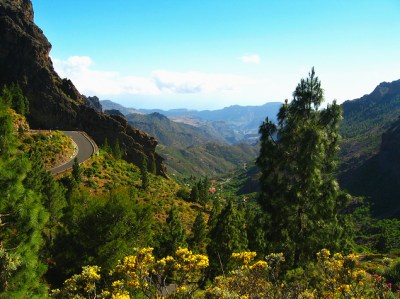
The Canary Islands sit off the coast of Africa, blessed with eternal spring. Temperatures rarely dip below eighteen degrees or climb above twenty-eight. This is why Europeans flock here in every season. Each island has its own character. Tenerife offers the volcanic majesty of Mount Teide. Gran Canaria combines dunes and pine forests. Lanzarote is a lunar landscape of black lava and white villages. Fuerteventura draws windsurfers to its endless beaches. La Palma and La Gomera are greener and quieter. The sunshine is not the only draw. Stargazing above the clouds on Teide is unforgettable. The local wines are excellent. The food blends Spanish, African, and Latin flavours.
In This Article
Exploring the Main Islands: Tenerife, Gran Canaria, and Lanzarote
Tenerife is the largest and most visited of the Canary Islands. Its centrepiece is Mount Teide, a volcano that rises 3,718 metres above sea level, making it Spain’s highest peak and the third tallest volcanic structure in the world by elevation from its base. The Teide National Park, a UNESCO World heritage site, surrounds the volcano with a surreal landscape of lava flows, volcanic craters, and rock formations that resemble the surface of Mars. A cable car carries visitors from the car park at 2,356 metres to an upper station at 3,555 metres in about eight minutes. From the upper station, a short hike along a marked path leads to the summit, but a free permit must be obtained in advance from the national park website. The views from the top are breathtaking: on clear days, the entire archipelago is spread out below, with the Atlantic Ocean stretching to the horizon in every direction. Gran Canaria offers a completely different landscape. The Maspalomas Dunes form a 400-hectare desert of golden sand that rolls down to the Atlantic, creating a landscape that feels more like the Sahara than the Atlantic. The interior of the island is cut by deep ravines, called barrancos, where ancient laurel forests and palm groves shelter native bird species including the Canary Islands chaffinch and the blue chaffinch. The island’s capital, Las Palmas, has a historic quarter called Vegueta where the cathedral and the Casa de Colon, a museum dedicated to Christopher Columbus, testify to the islands’ role as a stopover on voyages to the Americas. Columbus stopped here on his first voyage in 1492 to repair his ship before continuing across the Atlantic.
Outdoor Activities and Marine Life
Each Canary Island offers its own outdoor specialities. Fuerteventura, with 150 kilometres of white sand beaches and consistent trade winds, is one of Europe’s premier windsurfing and kitesurfing destinations. The beach at Sotavento, on the eastern coast, hosts an annual leg of the Windsurfing World Cup. The island is also excellent for cycling, with quiet roads and dramatic landscapes that attract professional teams for winter training camps. La Palma, known as La Isla Bonita, is covered in dense laurisilva forest, a type of subtropical forest that once covered much of southern Europe before the Ice Ages. Hiking trails crisscross the island, leading to viewpoints called miradores that overlook the immense Caldera de Taburiente, a volcanic crater 10 kilometres wide and 1,500 metres deep. The island’s night sky is protected by strict light-pollution laws, making it a UNESCO Starlight Reserve and one of the best places on earth for stargazing. Public telescopes are available at the Roque de los Muchachos Observatory, one of the world’s leading astronomical research facilities. La Gomera, the second smallest inhabited island, is covered by Garajonay National Park, an ancient subtropical forest where the trees are draped with moss and lichen, creating a primeval atmosphere. The island is also famous for Silbo Gomero, a whistled language used by shepherds to communicate across the deep valleys of the island. The language is taught in local schools and recognised by UNESCO as an Intangible Cultural heritage. Marine life around the islands is abundant. The waters are home to loggerhead sea turtles, bottlenose dolphins, short-finned pilot whales, and several species of shark. Boat tours from Tenerife and Gran Canaria run daily, with many operators guaranteeing sightings or offering a free return trip.
Climate, Travel Logistics, and Local Cuisine
The Canary Islands enjoy a subtropical climate that delivers year-round sunshine. Average monthly temperatures range from 17 degrees Celsius in January to 28 degrees in August. The winter months from November to February offer the most comfortable conditions for hiking and sightseeing, with daytime highs around 22 degrees. The summer months from June to September are hotter and bring the most reliable beach weather. The islands are served by eight airports with direct flights from most major European cities. The main international airports are Tenerife Sur, Gran Canaria, and Lanzarote. Inter-island flights operated by Binter Canarias and CanaryFly cost around 40 to 60 euros one way and take between 20 and 50 minutes. A ferry network operated by Naviera Armas and Fred. Olsen connects all islands, with crossings taking between 30 minutes and three hours depending on the route. For island hopping, a combination of flights and ferries is the most efficient approach, and many visitors spend three to four days on each island. The local cuisine is a highlight of any visit. Papas arrugadas, wrinkled potatoes boiled in salty water and served with mojo sauce, are the most famous Canarian dish. Mojo comes in two varieties: mojo rojo, made with red peppers, paprika, and cumin, and mojo verde, made with coriander, parsley, and green peppers. Fresh goat cheese, grilled fish, and seafood stews are staples across all the islands.
Which Canary Island matches your perfect holiday dream? ☀️
Explore all our Spain travel guides, from Barcelona Gaudí to Andalusia plazas.
Explore More
If you enjoyed this article, you might also like:
